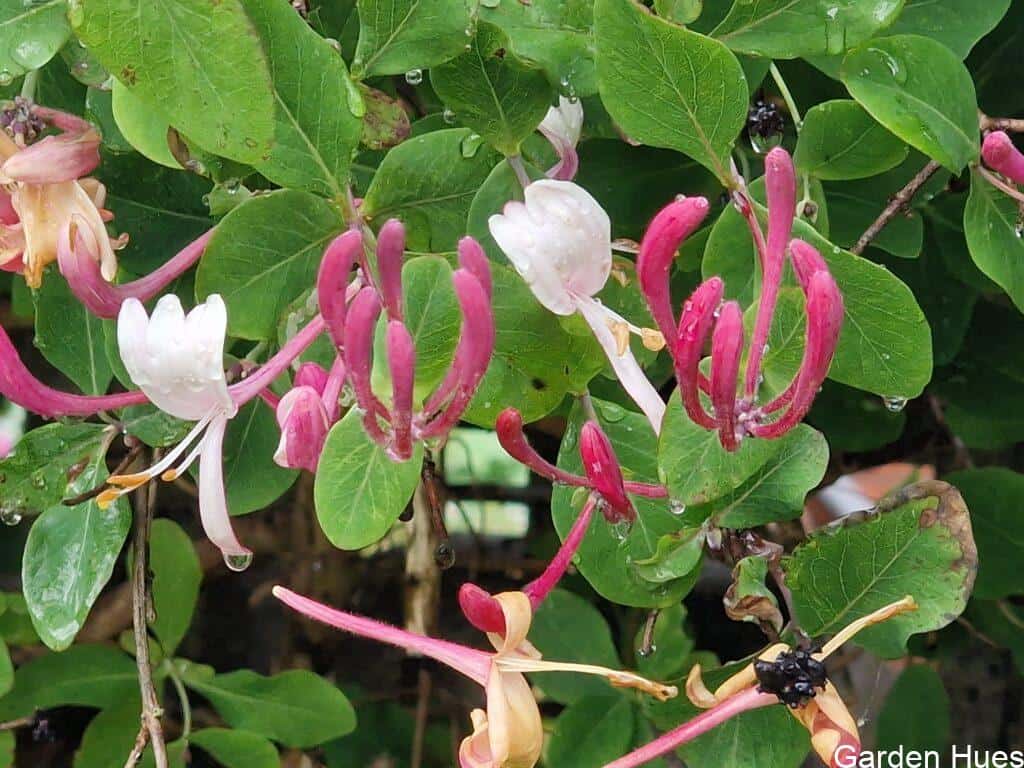
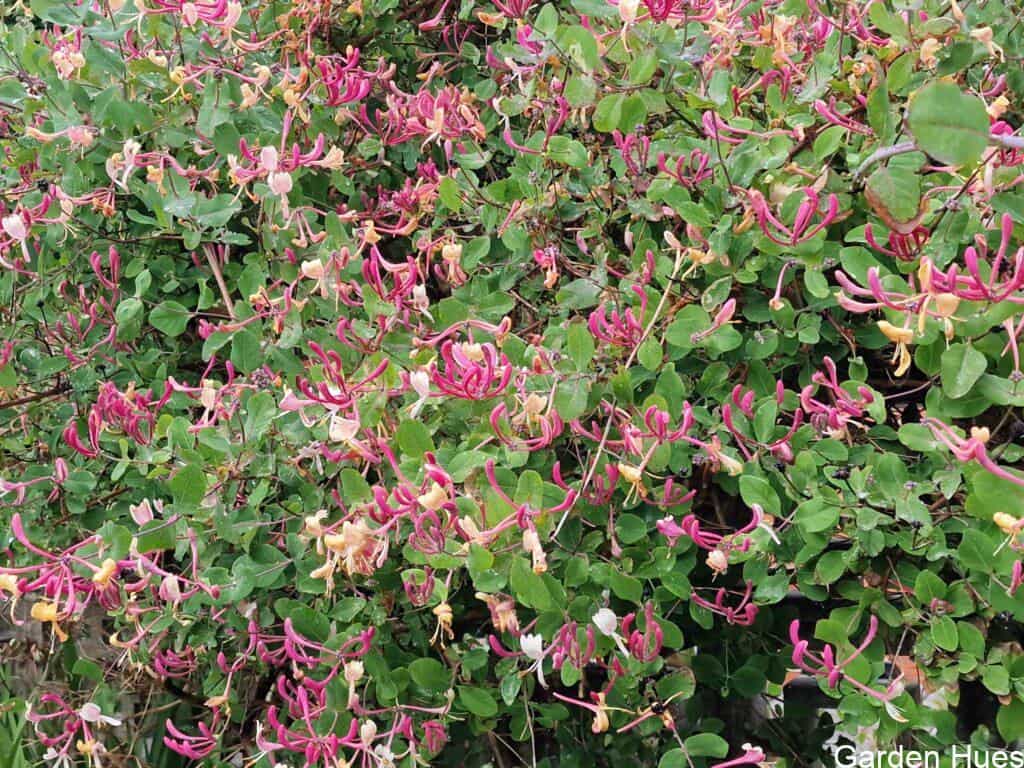
Honeysuckle is one of those classic plants that feels like summer. With its swirling, trumpet-shaped flowers and irresistible fragrance, it brings both beauty and scent to any garden. Whether you grow it up a wall, through a hedge or along a fence, honeysuckle is a brilliant choice for UK gardens — and it’s a magnet for pollinators too.
Popular Types of Honeysuckle (Lonicera):
There are dozens of varieties, but here are a few favourites suited to British gardens:
Lonicera periclymenum ‘Serotina’ (Late Dutch Honeysuckle) – A vigorous climber with deep red and cream flowers that bloom late into the season.
Lonicera japonica ‘Halliana’ – Semi-evergreen with creamy white flowers that fade to yellow. Fast-growing and great for screening.
Lonicera nitida – Not a climber, but a compact shrub honeysuckle often used for hedging or topiary. Subtle flowers, but brilliant structure.
Growing Tips for Honeysuckle:
Light: Most honeysuckles prefer sun or partial shade — ideally with their roots in the shade and their heads in the sun.
Soil: Tolerant of most soils but happiest in moist, well-drained conditions. Add compost when planting to help it settle in.
Support: Climbing varieties need a trellis, fence or arch to scramble up. Tie in young shoots to help them get going.
Pruning:
Shrub types: prune after flowering to keep a neat shape.
Climbers: prune in late winter or early spring. Thin out tangled or dead stems and shorten overly long shoots.
Watering: Keep watered during dry spells, especially in the first year.
Is Honeysuckle Good for Pollinators?
Absolutely! Honeysuckle flowers are rich in nectar and their sweet evening scent attracts moths and night-flying insects, as well as bees and butterflies by day. It’s one of the best plants for supporting a wide range of pollinators, and if you leave the berries on in autumn, birds like thrushes and blackbirds will enjoy them too.
Companion Ideas:
Pair with clematis for a lush, layered look. Or let it grow through an old tree or large shrub to mimic its natural woodland habit.