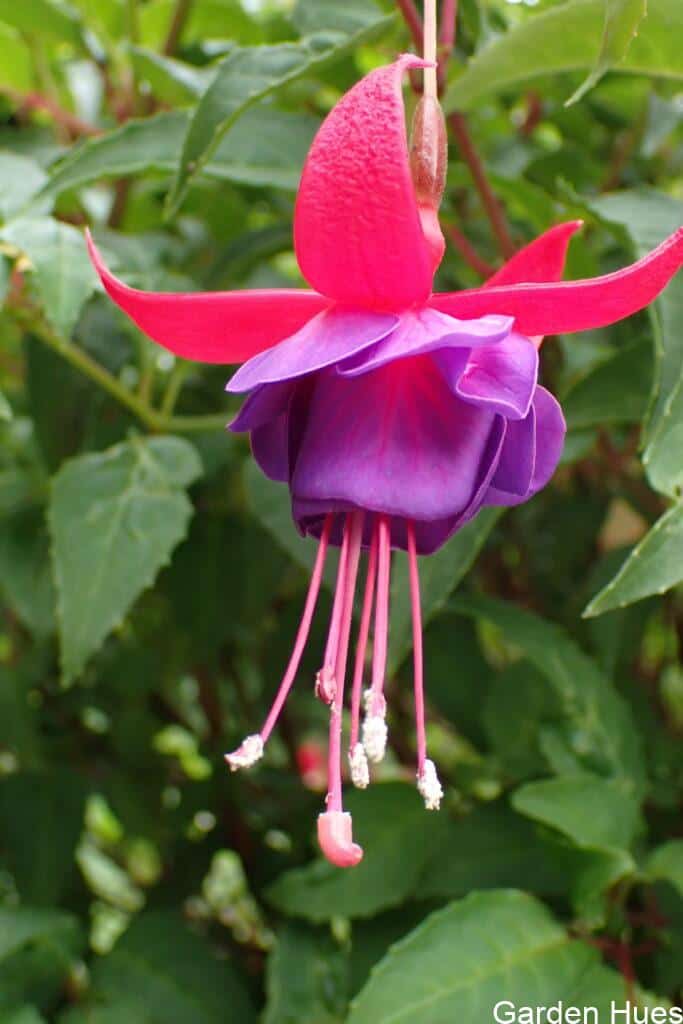
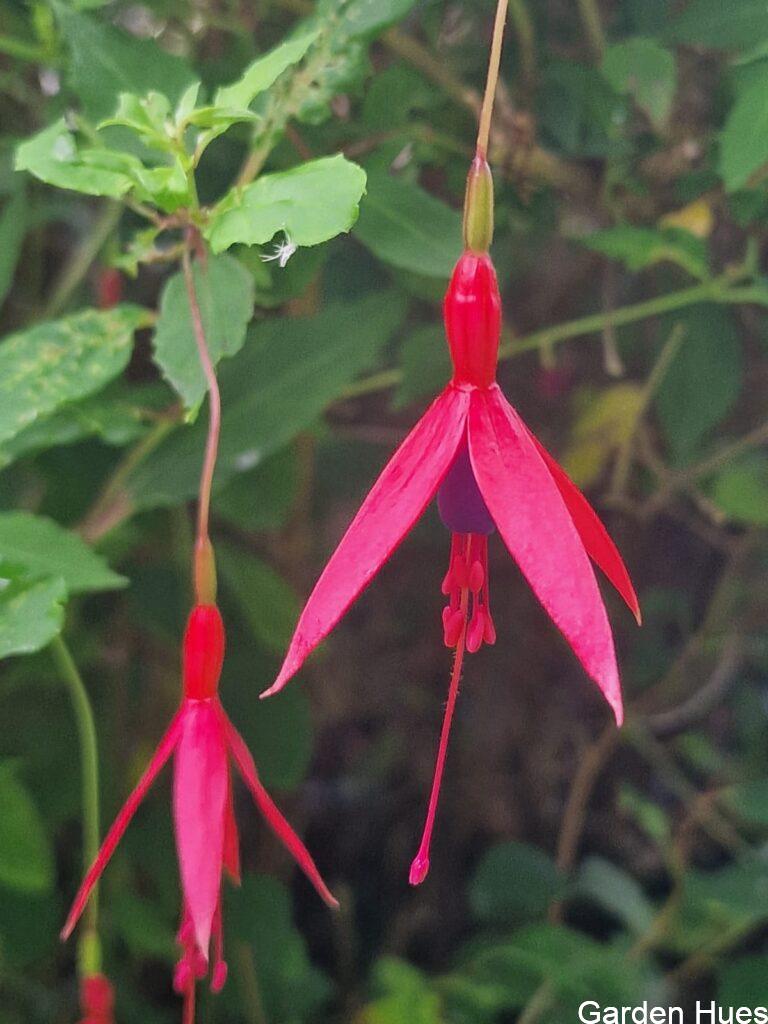
Fuchsias are a firm favourite among UK gardeners – and for good reason. Their intricate, drooping flowers bring a touch of elegance to beds, borders, hanging baskets and containers. With colours ranging from deep magenta to soft pinks and purples, these versatile plants offer long-lasting blooms from early summer right into autumn. Whether you’re a beginner or a seasoned gardener, fuchsias are a joy to grow and a great way to bring life to your outdoor space.
A Few Popular Types of Fuchsias:
There are hundreds of fuchsia varieties, but here are three reliable favourites you can easily find in UK garden centres:
Fuchsia ‘Delta’s Sarah’ – A hardy variety with striking violet-blue flowers and pale sepals. It works beautifully in the ground or in pots and survives most UK winters.
Fuchsia ‘Mrs Popple’ – Another hardy classic, this one has bright red and purple flowers and grows into a bushy, upright shape – brilliant for borders.
Fuchsia ‘Swingtime’ – A trailing fuchsia perfect for hanging baskets. It produces large double flowers with red and white tones that spill over containers beautifully.
Growing Tips for Fuchsias:
Light: Fuchsias prefer partial shade. Morning sun and afternoon shade work best, especially in hotter parts of the UK.
Soil: They like fertile, well-drained soil. Improve your planting area with compost or organic matter to keep roots happy.
Watering: Keep them consistently moist but not soggy – especially during hot spells. Container plants may need daily watering in summer.
Feeding: Feed regularly with a balanced liquid fertiliser to keep those flowers coming.
Pruning: Trim back hardy varieties in spring to encourage fresh growth. Remove any dead or damaged stems after frost.
Overwintering: Hardy fuchsias can stay in the ground with a mulch cover. Tender ones should be brought indoors or into a greenhouse before the first frost.
Are Fuchsias Good for Pollinators?
Yes – especially the single-flowered varieties. Their tubular flowers attract bees and hummingbird hawk-moths in the UK. While some double-flowered types may be less accessible to pollinators, having a mix of both means your garden can be both beautiful and beneficial. If you’re planting for wildlife, choose single blooms and plant them near other pollinator-friendly plants for maximum impact.