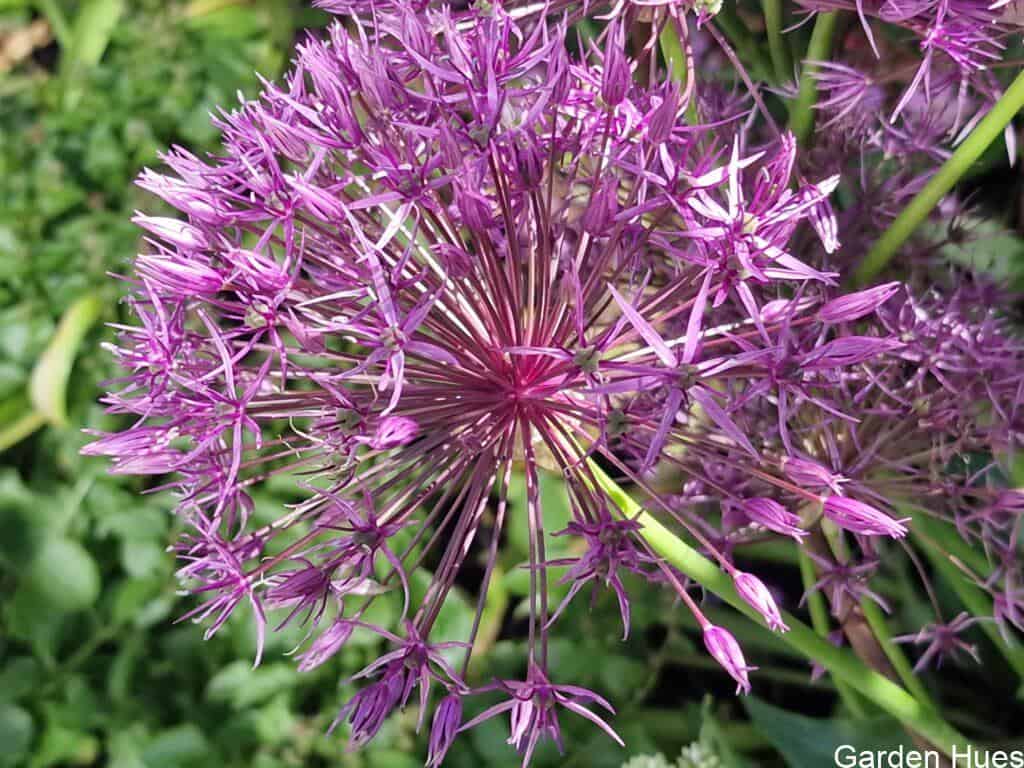
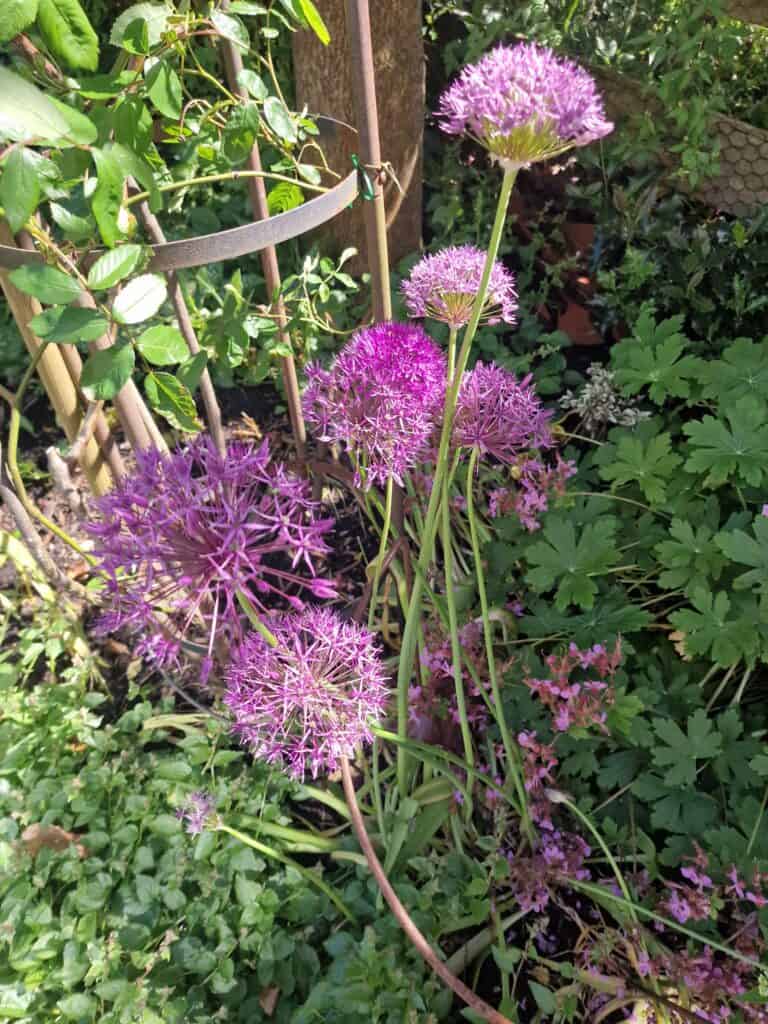
If you want to add elegance, structure and a little bit of surprise to your garden, alliums are a must. These ornamental onions send up tall stems topped with bold, round flowerheads — like fireworks frozen in time. They bloom in late spring to early summer, filling that tricky seasonal gap between spring bulbs and summer perennials. And as a bonus, bees absolutely love them.
Popular Alliums for UK Gardens:
There are loads of varieties to choose from, but here are a few that are easy to grow and make a big impact:
Allium ‘Purple Sensation’ – One of the most popular varieties, with dense violet globes on tall stems. Great for borders and cutting.
Allium cristophii (Star of Persia) – Giant silver-purple starbursts that add architectural beauty even after flowering.
Allium sphaerocephalon (Drumstick Allium) – Smaller, later-flowering with egg-shaped blooms that start green and turn burgundy. Perfect for naturalistic planting.
When to Plant Alliums:
Plant bulbs in autumn — usually September to November, before the ground freezes.
Choose a sunny spot and plant at a depth of 2–3 times the height of the bulb.
Space them well apart to allow the flowers room to shine.
Growing Tips:
Soil: Alliums prefer well-drained soil. Add grit if your garden tends to be heavy or clay-based.
Position: Full sun is best for strong stems and big blooms.
Watering: Once planted, they’re fairly drought-tolerant. Water when dry during active growth, but avoid soggy soil.
Support: Taller types may benefit from a bit of support in windy areas.
Aftercare: Let the foliage die back naturally — this feeds the bulb for next year. The flower heads look great even when dried.
Are Alliums Good for Pollinators?
Absolutely! Alliums are a major hit with bees, butterflies and hoverflies. Their globe-shaped flowerheads are made up of dozens (sometimes hundreds) of tiny florets, each packed with nectar. You’ll often see bumblebees bouncing from floret to floret like they’re at a buffet. Planting a mix of early and late varieties keeps the pollinator party going longer.
Companion Ideas:
Alliums look amazing rising up through low-growing plants like geraniums, salvia, or grasses. You can also plant them with tulips or camassia for a layered spring display.