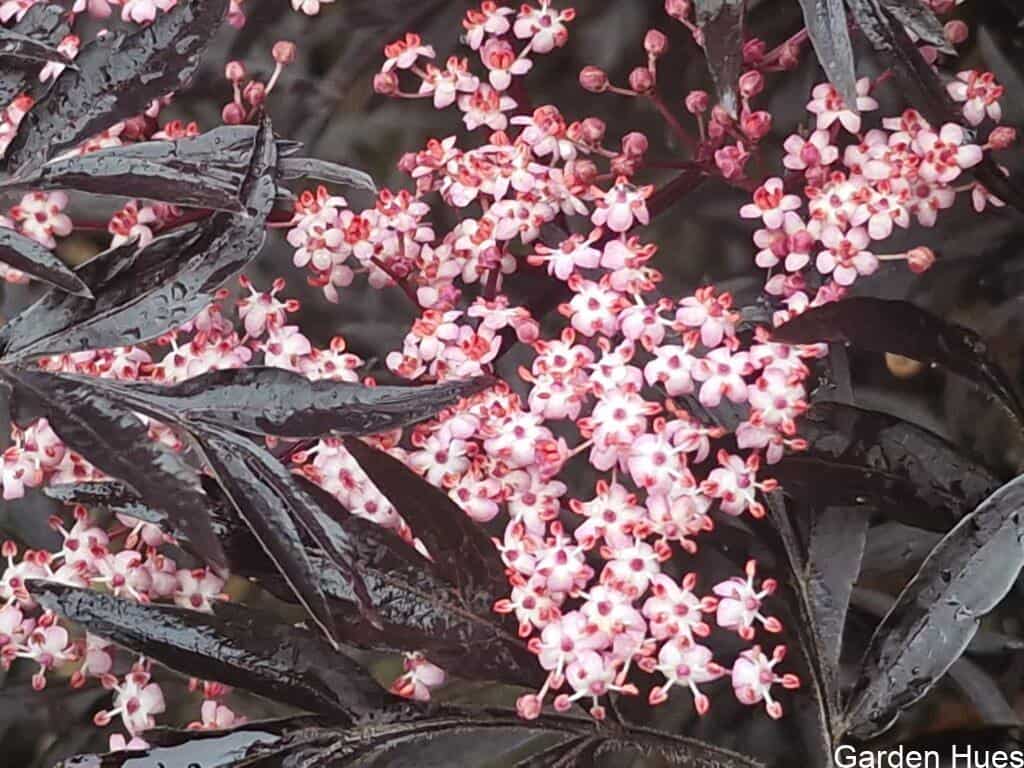
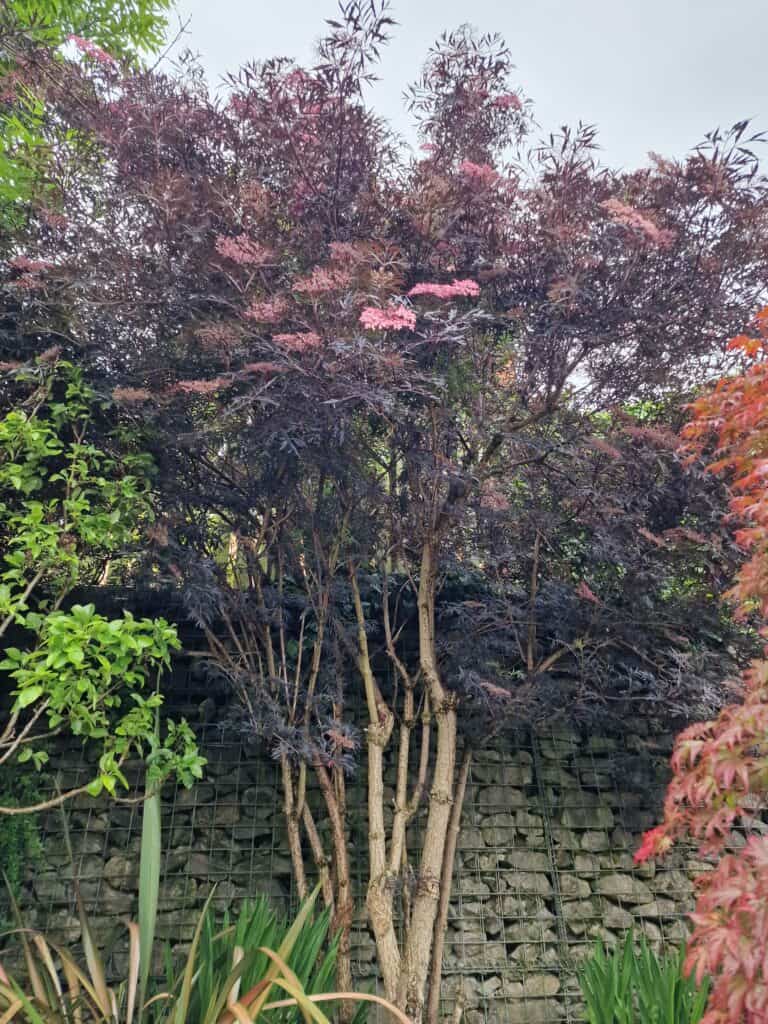
If you’re after something bold and beautiful that still blends into a wildlife-friendly garden, Sambucus nigra ‘Black Lace’ ticks all the boxes. With its finely cut, deep purple-black foliage and frothy pink flowers, this elder is a real showstopper — and it’s just as tough and easy to care for as its wild cousins. Whether used as a statement shrub, part of a mixed border or even in a large container, ‘Black Lace’ brings drama and softness all at once.
What Makes ‘Black Lace’ Special?
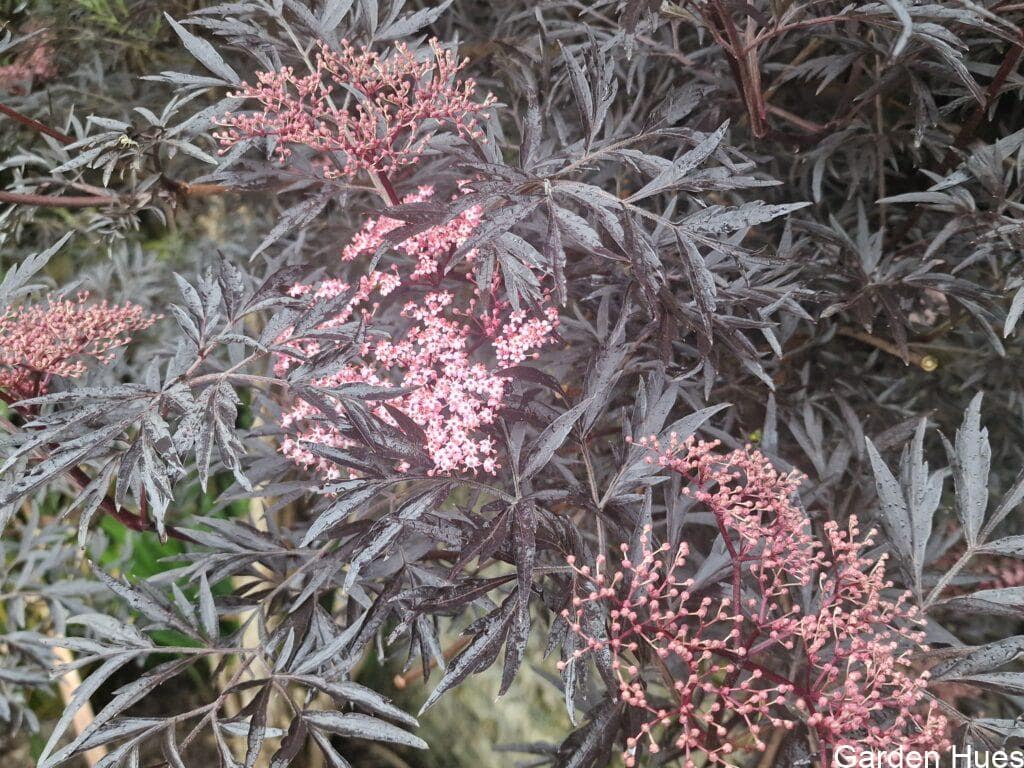
This cultivated variety of elder offers the feathery, almost Japanese maple-like foliage in a striking near-black tone. In early summer, it bursts into flat clusters of soft pink, lemon-scented flowers which contrast beautifully with the dark leaves. Later, it produces blackish-red berries that are great for wildlife or for making syrups and cordials — once cooked.
When to Plant Sambucus ‘Black Lace’:
The best time to plant is in autumn or early spring, when the soil is moist and not frozen.
Choose a spot in full sun for the darkest leaf colour, or light shade for a softer effect.
It thrives in most soil types but prefers moist, well-drained ground with plenty of organic matter.
Growing Tips:
Position: Full sun or light shade; provide space as it can grow up to 2–3m tall and wide.
Watering: Keep it watered during dry spells in the first year. Once established, it’s fairly drought-tolerant.
Feeding: A mulch of compost in spring helps keep it healthy, but it rarely needs feeding.
When and How to Prune:
Prune in late winter or early spring (Feb–March) before new growth starts.
You can prune lightly to shape and control size or cut it back hard (to 30–60cm) to encourage lush, fresh foliage.
Removing some of the oldest stems every few years keeps the plant rejuvenated and tidy.
Is Sambucus ‘Black Lace’ Good for Pollinators?
Yes — its flowers are rich in nectar and attract bees, hoverflies and butterflies in early summer. The berries that follow are loved by birds, especially blackbirds and thrushes. It’s one of those rare ornamental shrubs that’s as valuable to wildlife as it is eye-catching.
Companion Ideas:
Pair with silver foliage plants, pale pink roses or white perennials like astrantia or campanula for contrast. It also works beautifully alongside ornamental grasses.